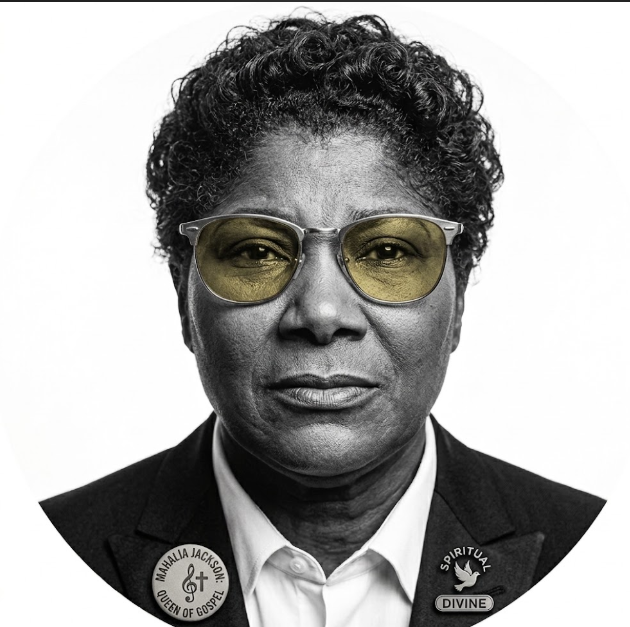
Mahalia Jackson had the most powerful voice in American history and she gave every note of it
to God. She refused to sing secular music — turned down nightclubs, turned down jazz, turned
down pop — because she believed that the gift was not hers to spend on anything less than
the gospel. And with that single-minded devotion she became the most famous gospel singer who
ever lived, sold millions of records, sang at the March on Washington, and proved that a Black
woman from the poorest ward in New Orleans could shake the conscience of a nation without ever
once compromising what she was put on earth to do.
Born Mahala Jackson in 1911 in the Black Pearl neighborhood of New Orleans, raised in a shotgun
house with twelve relatives, daughter of a longshoreman father who preached on Sundays and a
mother who died when Mahalia was five. She grew up in the church — Mount Moriah Baptist
— singing before she could read, absorbing the jubilee shouts and ring-shout rhythms of
Sanctified worship alongside the blues and jazz that seeped through the walls of every house in
the Crescent City. She never took a voice lesson. She never needed one. God had already taught her.
At sixteen she moved to Chicago, joined the Greater Salem Baptist Church choir, and within a few
years was the most electrifying voice on the South Side gospel circuit. Thomas A. Dorsey —
the father of gospel music, the man who fused blues structure with sacred lyrics — heard
her and recruited her as his primary demonstrator. For fourteen years they toured Black churches
across America, Dorsey writing the songs and Mahalia detonating them. She could start a hymn in
a whisper and build it to a roar that made grown men weep and women fall out in the aisles. She
did not merely sing gospel — she was gospel, the physical manifestation of faith turned
into sound.
“Move On Up a Little Higher” (1947) changed everything. It sold eight million
copies — a gospel record, not pop, not R&B, gospel — making her the first
gospel artist to have a million-selling record and proving that sacred music could reach a mass
audience without being diluted. She followed it with hit after hit: “I Believe,”
“He’s Got the Whole World in His Hands,” “How I Got Over,”
each one delivered with the full force of a woman who treated every recording session like a
worship service. Columbia Records signed her. Ed Sullivan put her on television. She sang at
Carnegie Hall, at the Newport Jazz Festival, at Royal Albert Hall. The Queen of Gospel was
not a niche act — she was an international star who refused to change a single thing
about what she sang or why she sang it.
The pressure to cross over was relentless. Record executives, agents, venue owners — they
all saw the voice and the fame and the money waiting on the other side of a pop record. Mahalia
said no. Every time. Nightclub owners offered her fortunes. She said no. Producers begged her
to record secular material. She said no. She did not judge the artists who crossed over —
she loved Sam Cooke, adored Nat King Cole — but for her the music was ministry, and
ministry does not negotiate with the marketplace. “I sing God’s music because it
makes me feel free,” she said. “It gives me hope. With the blues, when you finish,
you still have the blues.”
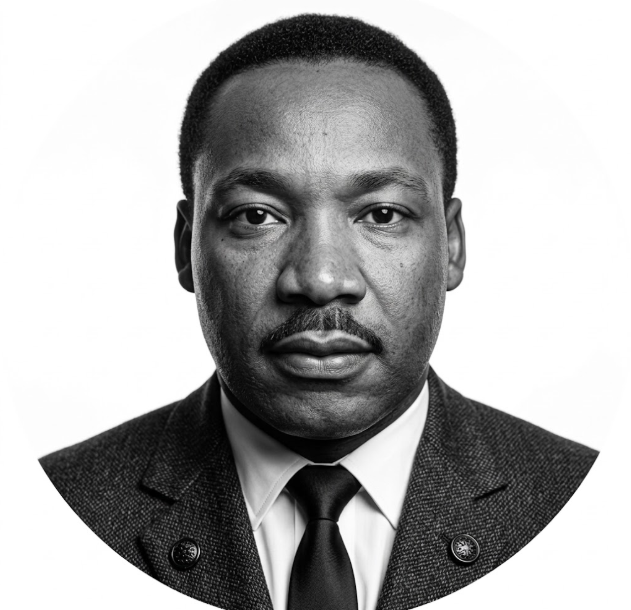
Then came the movement. Mahalia Jackson and Martin Luther King Jr. were bound together by faith
and friendship and the shared conviction that justice is a spiritual obligation. She sang at
rallies, at fundraisers, at the homes of movement leaders when they needed strength. She sang
“I Been ’Buked and I Been Scorned” at the March on Washington on August 28,
1963, right before King took the podium. And when he began his prepared remarks — the
written speech, the careful one — it was Mahalia who called out from behind him:
“Tell them about the dream, Martin!” He heard her. He set aside his notes.
And what followed was the most famous oration in American history. The “I Have a
Dream” speech exists because Mahalia Jackson told Martin Luther King to preach.
She sang at the inaugurations of Eisenhower and Kennedy. She sang for heads of state across
Europe and Asia. She used her platform to register voters, to raise money for the NAACP, to
quietly buy property in white neighborhoods as an act of deliberate integration. When white
neighbors shot at her house and firebombed her lawn, she did not move. She had faced worse.
She had come from nothing, from a shotgun house with no plumbing, from a city that wanted
Black people to sing but not to own, and she had made herself the most celebrated vocalist
in the world without ever once bending to anyone’s definition of success but her own.
- She proved gospel could move the worldMahalia
Jackson sold tens of millions of records singing nothing but sacred music, proving that the
gospel tradition was not a niche genre but a universal language. She brought church music
to Carnegie Hall, to the Newport Jazz Festival, to international television — and she
did it without ever diluting the message or the delivery. She did not bring gospel to the
mainstream; she proved the mainstream was not big enough to contain it.
- She refused to compromise, and it made her greaterEvery
offer to cross over to secular music was a test, and she passed every one. She turned down
more money than most artists ever see because she understood that her voice was not a commercial
instrument but a spiritual one. That refusal was not stubbornness — it was integrity so
complete that it became its own kind of power.
- She catalyzed the most famous speech in American historyWhen
Martin Luther King Jr. stood at the Lincoln Memorial on August 28, 1963, it was Mahalia Jackson
who called out “Tell them about the dream, Martin!” — and he listened.
The prepared remarks became the improvised masterpiece. The carefully worded policy speech became
“I Have a Dream.” One woman’s voice, shouted from behind a podium, changed
the course of a movement.
- She embodied the spiritual backbone of the civil rights movementMahalia
was not a marcher or an organizer — she was the movement’s voice, its worship
leader, its source of courage when courage was running out. She sang at rallies and
funerals and living rooms where exhausted activists needed to hear that God had not forgotten
them. She raised money, registered voters, and put her body on the line by integrating
neighborhoods. She proved that faith is not passive — it is the fuel of revolution.
- She proved that a Black woman from nothing could become everythingBorn
in poverty in the most segregated city in America, with no formal training, no wealthy patron,
no compromise, Mahalia Jackson became the most celebrated gospel artist in history. She
sang for presidents and paupers with the same fire. She owned her home in a white neighborhood
and refused to leave when they bombed her lawn. She was the living proof that greatness does
not require permission.
“I sing God’s music because it makes me feel free. It gives me hope. With the
blues, when you finish, you still have the blues.”
— Mahalia Jackson: the case that the most powerful voice in
American music belonged to a woman who never once used it for anything less than the highest
purpose she knew, who took the raw materials of poverty, grief, and faith and forged them into
a sound so overwhelming it made a preacher improvise the greatest speech of the twentieth century,
because she understood what every cynic forgets — that the sacred is not separate from the
struggle, that a hymn sung with total conviction is a revolutionary act, and that the voice of
God sounds exactly like a contralto from New Orleans who means every single word.
Mahalia Jackson belongs on this list because she is the proof that conviction is power. She
took a voice that could have made her the biggest pop star on earth and consecrated it entirely
to God, and God repaid her by making her the most important singer of the twentieth century anyway.
She did not cross over. She did not water down. She did not bend for a single record executive,
nightclub owner, or cultural gatekeeper who told her that sacred music had a ceiling. She blew
through every ceiling they built and brought the church with her. She sang at the March on Washington
and told Martin Luther King to tell them about the dream, and he did, because when Mahalia Jackson
tells you to preach, you preach. She is the singer as prophet, as activist, as the living evidence
that the strongest thing a person can do is decide what they are and never, ever, become anything
else.